John
The Yellow Wall PaperJohn, a physician and the narrator’s husband, is both her principal caregiver and the authority who defines what her illness means. He insists that she needs rest, air, and self-control, while she believes that his treatment and refusal to take her suffering seriously are preventing her recovery. His care is real, but its terms leave little room for her judgment or work; that contradiction makes him central to the narrator’s isolation and eventual resistance.
Identity and Medical Authority
John is presented as practical to an extreme: he has no patience with faith or superstition and scoffs at claims that cannot be seen, felt, or measured. His professional outlook governs not only his diagnosis but also what counts as credible evidence. He calls the narrator’s condition temporary nervous depression with a slight hysterical tendency, a judgment shared by her brother, also a physician of high standing. The narrator privately doubts John’s assessment and wonders whether his own medical role is one reason she is not improving faster.
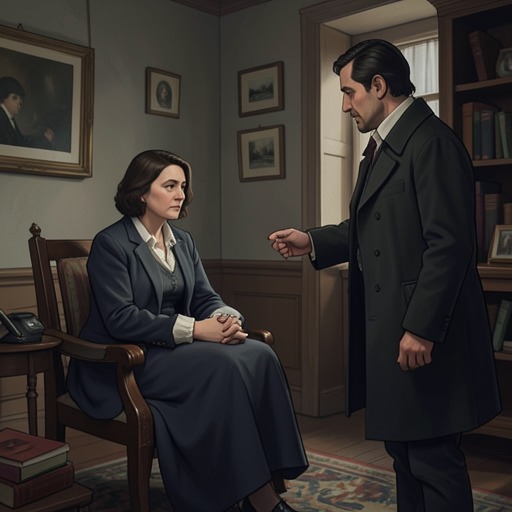
That disagreement is more than a difference in temperament. John does not believe that the narrator is sick in the way she says she is; because he sees no sufficient reason for her suffering, he is satisfied that there is no serious problem. The narrator, meanwhile, experiences distress and a sense of uselessness that his account cannot accommodate. His confidence allows him to treat her self-report as less authoritative than his professional judgment, even when she says she is not getting better.
Treatment and Control
John arranges a regimen of phosphates or phosphites, tonics, journeys, fresh air, exercise, and prohibition from work until recovery. The narrator disagrees with his ideas: she thinks congenial work, excitement, and change would help. She does write for a time despite the restriction, but says that concealment exhausts her and that open writing would meet heavy opposition. The treatment therefore affects not only her daily activity but also the form in which she can record and communicate her experience.
The care is organized hour by hour. John gives the narrator a schedule prescription for each part of the day and takes decisions out of her hands. She recognizes that he is careful and loving, and feels guilty for not valuing his attention more; at the same time, being relieved of responsibility leaves her without control over the activities she thinks might help. The tension is visible in his language of protection: he says that she can absorb air continually, while exercise depends on her strength and food on her appetite, and on that basis the couple take the top-floor nursery for her rest.
John also limits the conditions he believes might stimulate her. The narrator wants companionship and advice about her writing, and imagines that society and stimulus could help; John says that inviting the stimulating Cousin Henry and Julia would be like putting fireworks in her pillowcase. When she is tired, he reports that if she does not improve more quickly he will send her to Weir Mitchell in the fall. She does not want to go, citing a friend who had been under his care and describing him as like John and her brother, only more so. His proposed escalation thus appears to her not as reassurance but as a continuation of the same restrictive approach.
Marriage and Competing Accounts of Illness
John’s authority is strengthened by the intimacy of the marriage. The narrator observes that he laughs at her, adding that one expects such laughter in marriage; she also describes him as loving and careful. She feels that she ought to be a help and comfort to him, and calls herself a burden when she cannot fulfill that role. Her account registers affection and dependence alongside frustration: she does not simply reject his care, but finds herself unable to make its loving intentions answer her own experience.
When the narrator asks to be taken away because she is not gaining at the house, John answers that their lease has three weeks left, repairs at home are unfinished, and he cannot leave town. He would go if she were in danger, he says, but considers her better, citing her flesh, color, appetite, and the reassurance he feels as a doctor. She disputes this evidence directly: she has not gained weight, and her appetite is worse in the morning when he is away, even if it seems better in the evening when he is present. The exchange exposes the limits of his measurements: the signs he interprets as improvement do not match her own account of her body or daily experience.
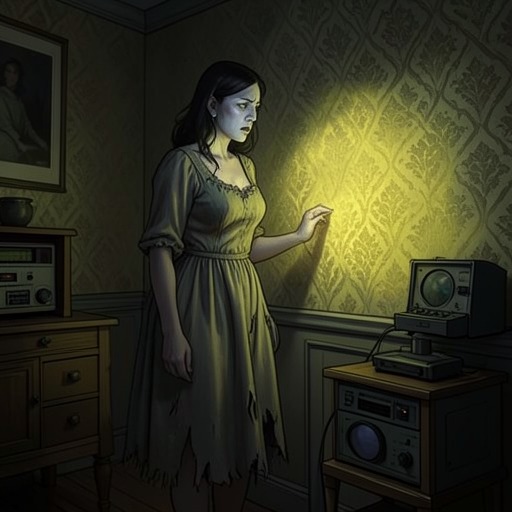
When she begins to say that she may be better physically, John’s stern, reproachful look stops her from continuing. He then begs her, for his sake, their child’s sake, and her own, never to entertain the idea that her condition is worsening. He calls that idea a false and foolish fancy and asks her to trust him as a physician. The appeal joins marital devotion, concern for their child, and professional authority in a single demand. She says no more, but remains awake for hours, still turning over what she sees in the wallpaper. His effort to close discussion does not resolve her uncertainty; it drives it into private thought.
Crisis and Narrative Significance
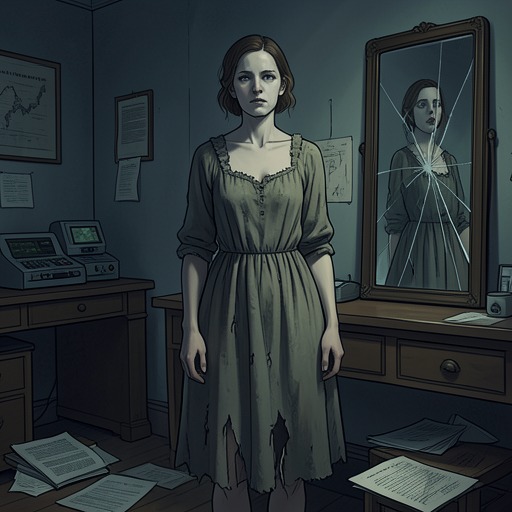
The narrator records that John does not know how much she suffers. His belief that there is no reason for her distress satisfies him, while she feels weighed down by her inability to do her duty and regrets that she has become a burden. The difference between what he can observe and what she can feel is therefore not incidental: it is the widening gap at the center of their relationship. Her secret writing supplies a record of experience that his diagnosis and treatment leave out.
At the story’s climax, John reaches the locked room and cries out in alarm at what the narrator is doing. She keeps creeping and looks at him over her shoulder. She tells him that she has got out despite him and Jennie, and that she has pulled off most of the paper so he cannot put her back. The moment turns his earlier protective restrictions into part of the resistance she names: the narrator describes escape in opposition to those who, in her understanding, would return her to confinement. John’s collapse at the sight of her marks the reversal of their physical and interpretive positions, while the narrator’s declaration makes clear that his authority has not restored the relationship to the order he prescribed.
John is consequently neither reduced to a simple villain nor absolved by his tenderness. His affection coexists with a treatment that forbids work, constrains choice, and repeatedly discredits the narrator’s account. The story’s portrait of him turns on that unresolved contradiction: the person who means to care for her is also the physician whose certainty leaves her increasingly alone with the knowledge of her own suffering.